Kuldirite
Most jewelers live their entire careers without ever seeing a piece of Kuldirite. Those who do tend to remember it for the rest of their lives.
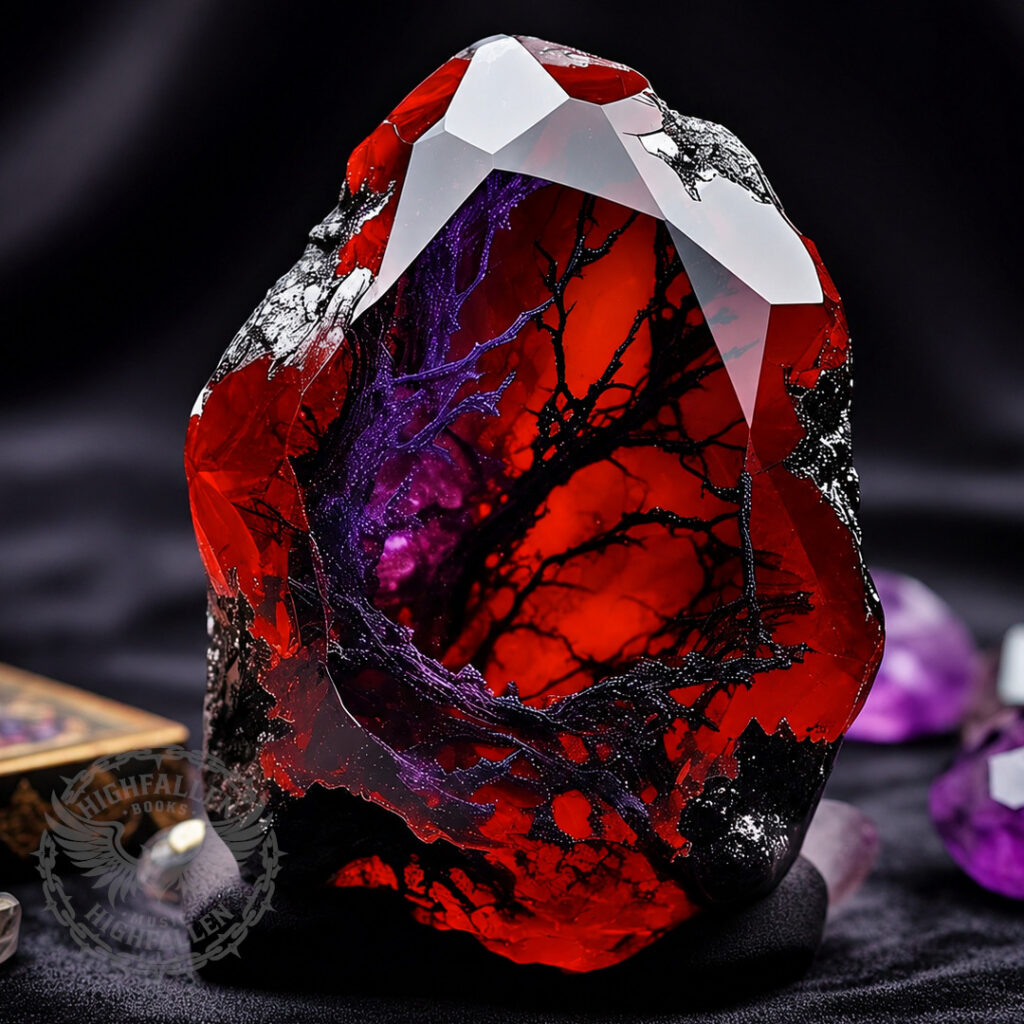
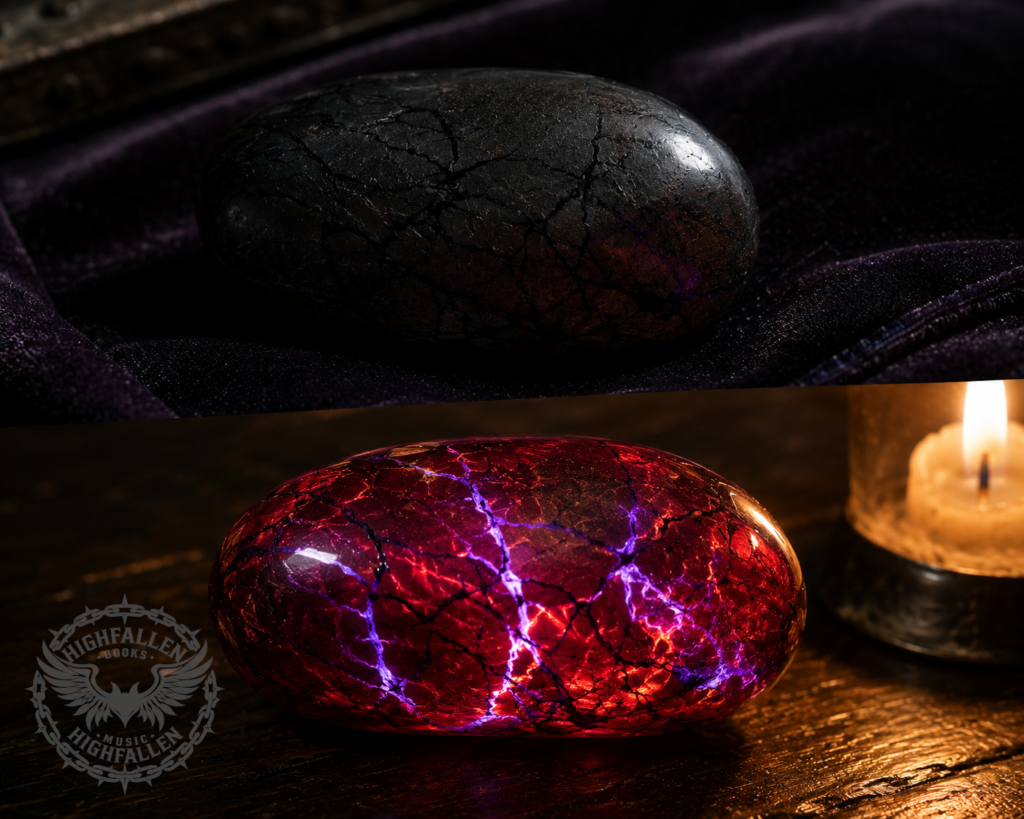
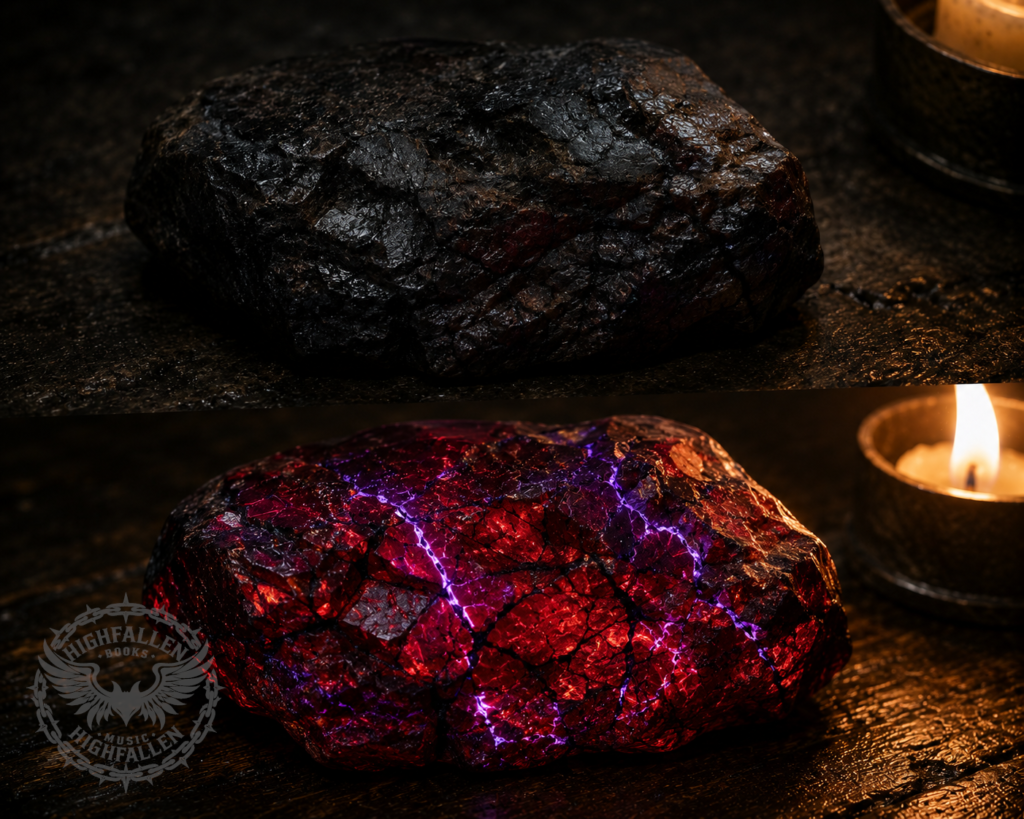
In its uncut state, Kuldirite looks almost like charcoal — dark, unremarkable, easy to overlook. Then it catches the light, and everything changes. The stone’s true deep red color emerges, threaded through with black veins that spider-web across its surface in swirling, dancing patterns. Those veins are not merely decorative — they are considered the mark of authenticity, the feature every expert looks for first. Cut and polished, Kuldirite produces flashes of red, black, and sometimes violet that seem to pulse and move from within the gem itself, as though something alive is turning slowly inside it. To call it beautiful is accurate but insufficient.
Kuldirite was discovered centuries ago on the island then known as Kuldirhold, and for a long time it was found nowhere else on Thanria. The reason, as the dwarves of Grimstone eventually learned, was that the island sat above multiple portals to the Deep Below. The unique energies radiating from those portals were producing the gemstone in the surrounding rock — a fact that made Kuldirite extraordinarily valuable and made the dwarves who controlled the island extraordinarily wealthy. The God Rain ended all of that. No new piece of Kuldirite has been found in over two hundred years, and what remains in circulation trades at prices that make seasoned merchants go pale.
The black-veined variety is priceless by any conventional measure. Its value, as one of the most respected gem experts in Thanria put it, is simply immeasurable — a word he did not use lightly. Whether any new Kuldirite will ever surface again is a question that collectors, merchants, and treasure hunters prefer not to think about too carefully — because answering it requires thinking about where it came from, and where it came from is Halzan.